“Choose” and “select” are very similar English verbs. Both can mean to pick one person or thing from several possibilities, which is why English learners often wonder whether they can be used interchangeably. In many sentences, they can—but there are small differences in tone, formality, and context that are worth knowing.
The biggest difference is that choose is more common in everyday English, while select often sounds more formal, deliberate, or systematic. For example, a friend might say, “Choose a movie,” while a form might say, “Select your preferred option.” Both mean that you should pick an option. However, select is especially common when making a careful choice from a list, menu, form, or set of options. This guide explains choose vs select, including their meanings, grammar, examples, common mistakes, synonyms, and practical differences in everyday and professional English.
Quick Answer
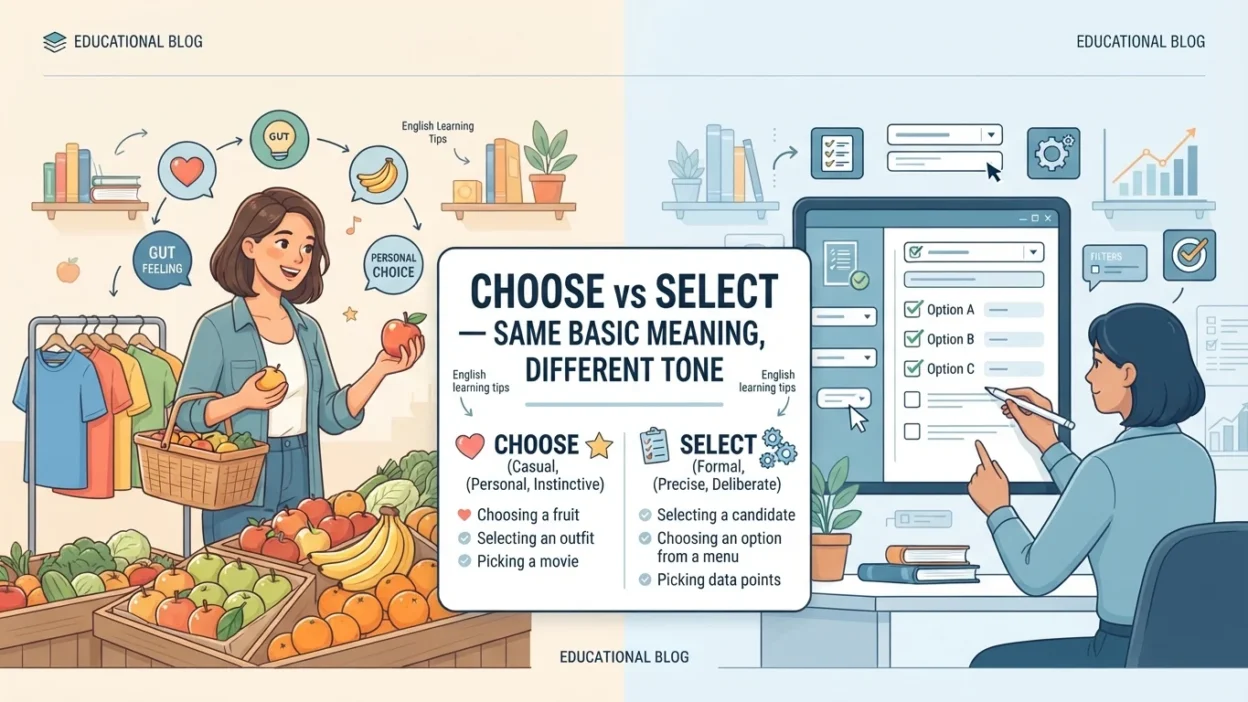
Choose and select both mean to pick something from several options. Choose is more natural and common in everyday English, while select is often more formal, deliberate, or associated with choosing from a specific list or set.
Why People Confuse It
The two words overlap heavily.
For example:
“Choose a color.”
and:
“Select a color.”
Both are correct.
The main difference is style and context:
- Choose → everyday, natural, broad
- Select → formal, deliberate, systematic
Think of choose as the general word and select as a more formal alternative in many contexts.
First Word: Choose
Choose means to decide which person or thing you want from two or more possibilities.
It is extremely common in everyday English.
Examples
“Choose your favorite dress.”
“I can’t choose between these two books.”
“You can choose whatever you want.”
It can be used for both simple and important decisions.
Common expressions
- Choose a color
- Choose a dress
- Choose a name
- Choose a career
- Choose an option
- Choose a restaurant
- Choose between two things
Second Word: Select
Select also means to choose or pick something, but it can sound more formal or deliberate.
It is especially common when someone is choosing from a defined list or set of options.
Examples
“Select your preferred language.”
“Please select an option from the menu.”
“The committee selected three candidates.”
In technology and forms, select is extremely common:
“Select your country.”
“Select a payment method.”
Comparison Table
| Feature | Choose | Select |
|---|---|---|
| Basic meaning | Pick or decide | Pick or decide |
| Everyday use | Very common | Less common |
| Tone | Natural/casual | Formal/professional |
| Lists/forms | Common | Very common |
| Careful/systematic choice | Possible | Often implied |
| Example | Choose a movie. | Select an option. |
| Past tense | Chose | Selected |
When to Use Each
Use “Choose” for Everyday Decisions
Use choose when speaking naturally about your personal decisions.
“Which one should I choose?”
“Choose whatever you like.”
“I chose the blue one.”
It sounds friendly and conversational.
Use “Select” for Formal or Systematic Choices
Select works especially well when the options are presented in a list, form, menu, or official process.
“Select your preferred payment method.”
“Please select one answer.”
“The manager selected the best candidate.”
Choose for Personal Preferences
“I chose chocolate ice cream.”
This sounds more natural than:
“I selected chocolate ice cream.”
The second sentence is grammatically correct but more formal than necessary.
Select for Official Decisions
“The committee selected five applicants.”
This sounds natural because the choice is part of a formal process.
Examples of Choose vs Select
Choose
- Choose a dress for the party.
- You can choose any color you like.
- I chose the blue one.
- She chose to stay home.
- Which option should I choose?
- We need to choose a restaurant.
Select
- Select your preferred language from the menu.
- Please select one answer.
- The teacher selected three students for the competition.
- The committee selected the final candidates.
- Select the file you want to upload.
- Users can select their preferred settings.
Common Mistakes
Mistake 1: Thinking “select” is always better
It isn’t.
In casual English:
“Choose whichever one you like.”
sounds much more natural than:
“Select whichever one you like.”
Both are grammatically possible, but the second sounds unnecessarily formal.
Mistake 2: Thinking “choose” is informal only
Choose is completely acceptable in formal writing too.
For example:
“Voters choose their representatives.”
So don’t assume that select must always be used in formal English.
Mistake 3: Confusing “choose” and “chose”
Remember:
- Choose = present/base form
- Chose = simple past
- Chosen = past participle
Examples:
“I choose the red one.”
“I chose the red one yesterday.”
“I have chosen the red one.”
Mistake 4: Forgetting “select” can imply a careful process
When a committee selects someone, it often suggests that the person was chosen after evaluation or consideration.
“The judges selected the winner.”
This sounds more deliberate than:
“The judges chose the winner.”
Both are correct, but selected emphasizes the formal process.
Memory Trick
Remember:
CHOOSE = everyday choice
SELECT = specific or formal selection
Imagine:
Choose a pizza 🍕
Select an option from a form 📋
This isn’t an absolute rule, but it is a useful shortcut.
American vs British English
There is no major difference between American and British English regarding choose and select.
Both words are commonly understood and used in both varieties.
The difference is mainly based on context and tone, not geography.
For example:
“Choose your seat.”
and:
“Select your seat.”
are both natural in American and British English.
However, websites, apps, forms, and official instructions frequently use select.
Similar Words
Pick
A very common informal synonym for choose.
“Pick a color.”
Decide
Means to make a decision.
“I decided to stay.”
Opt For
Means to choose one option, often after considering alternatives.
“She opted for the cheaper option.”
Prefer
Means to like or favor one option more than another.
“I prefer tea to coffee.”
Elect
A formal word meaning to choose, especially through voting.
“The members elected a new leader.”
Nominate
Means to formally suggest someone for a position, award, or role.
“She was nominated for the award.”
Final Verdict
Choose and select are very close in meaning, and in many sentences either one can work. The key difference is tone and context. Choose is the more natural word for everyday conversations and personal decisions, while select often sounds more formal and is common in forms, menus, instructions, official decisions, and situations involving careful evaluation.
If you’re talking casually, choose is usually the best option. If you’re giving instructions such as “Select an option” or describing a formal decision such as “The committee selected the candidates,” select is often more appropriate.
FAQs
1. What is the difference between choose and select?
Both mean to pick something, but choose is more common in everyday English, while select can sound more formal or deliberate.
2. Is “choose” more informal than “select”?
Generally, yes. Choose is more conversational, while select is often preferred in formal instructions and official contexts.
3. Can choose and select be used interchangeably?
Often, yes. For example:
“Choose an option.”
“Select an option.”
Both are correct.
4. Which is better for a formal email: choose or select?
Either can work. Select may sound more formal when referring to a defined set of options, but choose is also perfectly professional.
5. What is the past tense of choose?
The past tense is chose.
“I chose the blue dress.”
The past participle is chosen.
“I have chosen the blue dress.”
6. Is “pick” the same as “choose”?
Usually, yes. Pick is more informal.
“Pick a number.”
“Choose a number.”
Both mean essentially the same thing.
7. Which word is better for a website button?
Select is very common for menus, forms, and interface instructions.
For example:
Select a language
Conclusion
The difference between choose and select is mostly about tone and context, because both words can mean “pick one option.” Choose is the natural, everyday word and works for personal decisions, preferences, and ordinary conversations. Select often sounds more deliberate, formal, or systematic.
A simple rule is to use choose when talking naturally and select when dealing with forms, menus, instructions, committees, or formal selection processes. However, there is plenty of overlap, so neither word is automatically wrong simply because the other could be used.
Remember This
Choose = everyday decision
Select = formal, deliberate, or list-based choice
Choose a movie. ✅
Select an option from the menu. ✅

Miller Rhodes is an American nonfiction writer focused on personal growth and modern entrepreneurship.
His work blends thoughtful analysis with practical strategies for navigating today’s digital world.
He writes to help readers think clearer, act smarter, and build meaningful success.