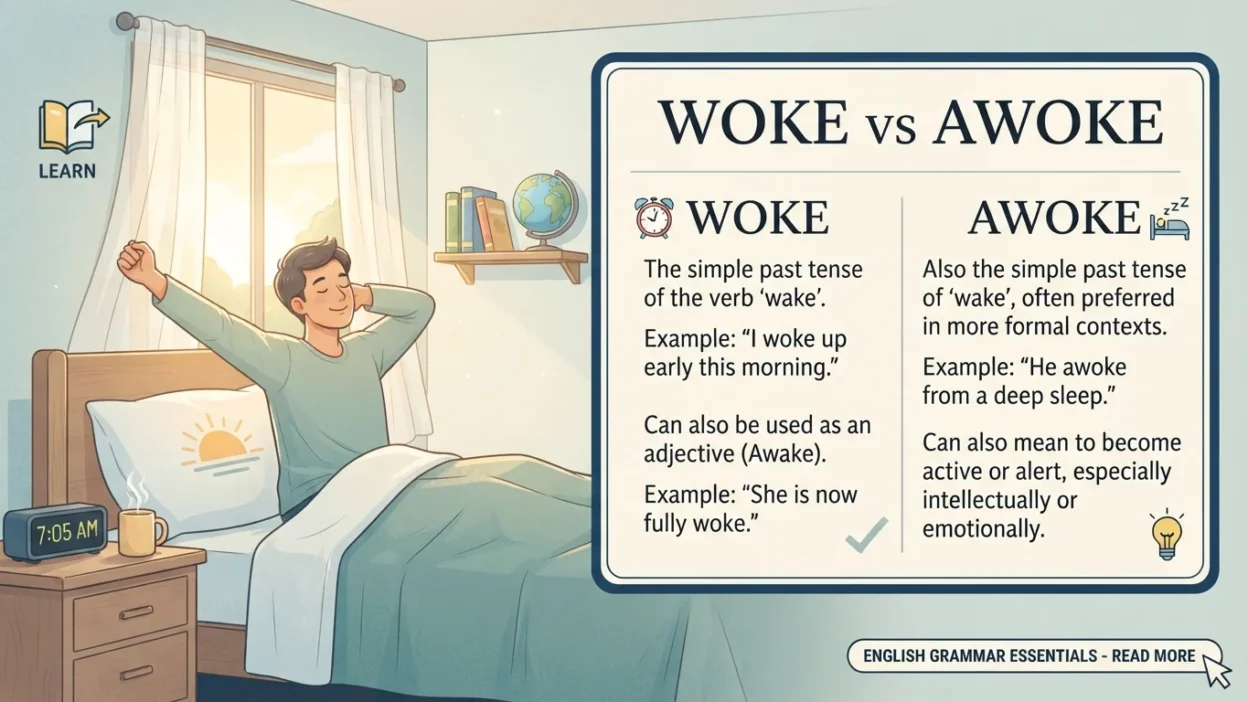
“Awoke” and “woke” are both forms of the verb wake, so it is understandable to wonder whether they mean the same thing. In many situations, they do: both can describe the past action of becoming awake. However, there are differences in usage, tone, and grammatical form that are useful to understand, especially if you want your English to sound natural.
In modern everyday English, “woke” is generally the more common choice, particularly in conversation. “Awoke” is also correct, but it can sound more formal, literary, or old-fashioned depending on the sentence. There is another important point: “woken” is the usual past participle of wake, so it should not normally be replaced by awoke. This guide explains awoke vs woke with clear definitions, examples, common mistakes, pronunciation, related words, and practical rules for choosing the right form.
Quick Answer
Woke and awoke can both mean became awake and are past-tense forms related to wake. Woke is much more common in everyday English, while awoke often sounds more formal or literary. For the past participle, use woken, not awoke.
Why People Confuse It
The confusion comes from the fact that wake has several forms:
- Wake → present/base form
- Woke → simple past
- Awoke → another past-tense form
- Woken → past participle
- Awakened → past tense/past participle of awaken
For example:
“I woke at 7 a.m.”
and:
“I awoke at 7 a.m.”
Both can be grammatically correct.
However:
“I have woken up.”
is correct, while:
“I have awoke up.”
is incorrect.
First Word: Woke
Woke is the simple past tense of wake.
It means became awake or stopped sleeping.
Examples
“I woke at six this morning.”
“She woke suddenly during the night.”
“He woke up when the alarm rang.”
Woke is the most natural choice for everyday conversation.
Common expressions
- Woke up early
- Woke suddenly
- Woke during the night
- Woke to a noise
- Woke from a dream
For example:
“I woke up because of the noise.”
Second Word: Awoke
Awoke is also a past-tense form of wake.
It has essentially the same basic meaning:
became awake
However, awoke can sound more formal, literary, poetic, or old-fashioned than woke.
Compare:
“I woke early this morning.”
with:
“I awoke early this morning.”
Both are correct, but the second has a more literary tone.
You might see awoke more frequently in:
- Literature
- Poetry
- Storytelling
- Formal writing
- Descriptive prose
Comparison Table
| Feature | Woke | Awoke |
|---|---|---|
| Basic meaning | Became awake | Became awake |
| Grammatical form | Simple past of wake | Past form of wake |
| Everyday use | Very common | Less common |
| Tone | Natural and conversational | More formal/literary |
| Example | I woke at 7. | I awoke at 7. |
| Past participle | Woken | Not used as past participle |
When to Use Each
Use “Woke” in Everyday English
If you are talking normally about waking up, woke is usually the safest choice.
“I woke up late today.”
“She woke when she heard the alarm.”
“I woke at midnight.”
It sounds natural and conversational.
Use “Awoke” for a More Literary Style
Awoke is useful when you want your writing to have a more formal or literary tone.
“He awoke to the sound of birds singing.”
This can sound more polished or descriptive than:
“He woke up to the sound of birds singing.”
Neither is wrong; the difference is mainly style.
Use “Woken” After Helping Verbs
When you need a past participle, use woken:
“I have woken up early every day this week.”
“She had woken before the alarm.”
Not:
❌ “I have awoke.”
Examples of Awoke vs Woke
Woke
- “I woke up at six this morning.”
- “She woke when the phone rang.”
- “He woke suddenly during the night.”
- “I woke from a strange dream.”
- “They woke early to catch the train.”
- “I woke up feeling refreshed.”
Awoke
- “I awoke before sunrise.”
- “She awoke to the sound of rain.”
- “He awoke suddenly in the middle of the night.”
- “The traveler awoke in an unfamiliar room.”
- “She awoke from a deep sleep.”
- “He awoke to find the room completely silent.”
Notice that the meaning remains essentially the same. Awoke simply gives the sentence a somewhat more literary feel.
Common Mistakes
Mistake 1: Using “awoke” as the past participle
❌ “I have awoke early.”
✅ “I have woken early.”
The past participle is woken.
Mistake 2: Saying “woke” is incorrect
It is not. Woke is completely standard English and is the more common choice in everyday speech.
Mistake 3: Thinking “awoke” is always better English
Not necessarily.
“I woke up late.”
is perfectly natural.
You do not need to replace woke with awoke to sound more correct.
Mistake 4: Confusing “wake,” “awake,” and “awaken”
These words are related but have different grammatical patterns.
- Wake → become conscious after sleeping
- Awake → be in a state of not sleeping
- Awaken → become awake; often more formal
- Woke → past of wake
- Woken → past participle of wake
Memory Trick
Remember:
WOKE = everyday past tense
AWOKE = literary/formal past tense
And:
WOKEN = past participle
A useful pattern is:
Wake → Woke → Woken
Example:
I wake early.
I woke early yesterday.
I have woken early all week.
For a more literary sentence:
I awoke before sunrise.
American vs British English
Woke and awoke are both recognized in American and British English.
The main difference is style and frequency, not regional grammar.
In both varieties:
“I woke up at seven.”
is very natural.
Awoke is also correct:
“I awoke at seven.”
but it can sound more formal or literary.
British and American speakers also commonly use woken as the past participle:
“I have woken up early.”
Similar Words
Wake
The base verb:
“I usually wake at seven.”
Wake Up
A common phrasal verb meaning to become awake:
“I wake up at seven every day.”
Awaken
A more formal or literary verb:
“The sound awakened him.”
Awake
Usually an adjective describing the state of being conscious rather than asleep:
“I was still awake at midnight.”
Woken
The past participle of wake:
“She has woken up.”
Final Verdict
Woke and awoke can both mean became awake, and both are grammatically correct when used as past-tense forms. The biggest difference is style: woke is common and natural in everyday English, while awoke often has a more formal, literary, or poetic quality.
If you are unsure which one to use in ordinary conversation, choose woke. But remember that when you need the past participle after have, has, or had, the correct form is generally woken.
FAQs
1. Is “awoke” correct English?
Yes. Awoke is a correct past-tense form of wake.
2. Is “woke” or “awoke” more common?
Woke is much more common in everyday English. Awoke is less common and can sound literary or formal.
3. Can I say “I have awoke”?
No. The usual past participle is woken.
Correct:
“I have woken up.”
4. Is “I woke up” grammatically correct?
Yes. “I woke up” is completely correct and very common.
5. What is the difference between “woke” and “awoke”?
Both can mean became awake. Woke is more common in everyday English, while awoke often sounds more formal or literary.
6. What is the past participle of wake?
The standard past participle is woken.
wake → woke → woken
7. Is “awoke” formal?
It can sound more formal, literary, or poetic than woke, especially in descriptive writing.
Conclusion
The choice between awoke and woke is mostly a matter of grammar and style. Both can describe the past action of becoming awake, but woke is the natural choice for most everyday situations. Awoke is perfectly correct but is more likely to appear in literature, formal writing, or descriptive storytelling.
The most important grammar point to remember is that woke and awoke are past-tense forms, while woken is the usual past participle. Once you remember wake → woke → woken, the difference becomes much easier to handle.
Remember This
Woke = common, everyday past tense.
Awoke = past tense with a more literary/formal feel.
Woken = past participle.

Miller Rhodes is an American nonfiction writer focused on personal growth and modern entrepreneurship.
His work blends thoughtful analysis with practical strategies for navigating today’s digital world.
He writes to help readers think clearer, act smarter, and build meaningful success.