If you have heard someone say “I was dossing off” and wondered what it means, you are not alone. The phrase can be confusing because “dossing” has more than one meaning in British informal English. In some contexts, doss can mean relaxing or doing very little, while “dossing off” can describe someone being idle or, depending on context, casually passing time. It is also sometimes confused with the much more common expression “dozing off,” which means gradually falling asleep.
Understanding the difference between dossing off and dozing off is important because changing just one letter can completely change the meaning. This guide explains the phrase in simple English, covers its British usage, gives practical examples, compares it with similar expressions, and explains when you should use each word. If you are learning English or trying to understand British slang, these examples will make the distinction much easier.
Quick Answer
“Dossing off” is informal British English and generally means wasting time, being idle, or relaxing instead of doing what you should be doing. If you mean falling asleep, the correct phrase is usually “dozing off.”
Why People Confuse It
The biggest reason for confusion is the similarity between:
- Dossing off
- Dozing off
They look and sound similar, but their meanings are different.
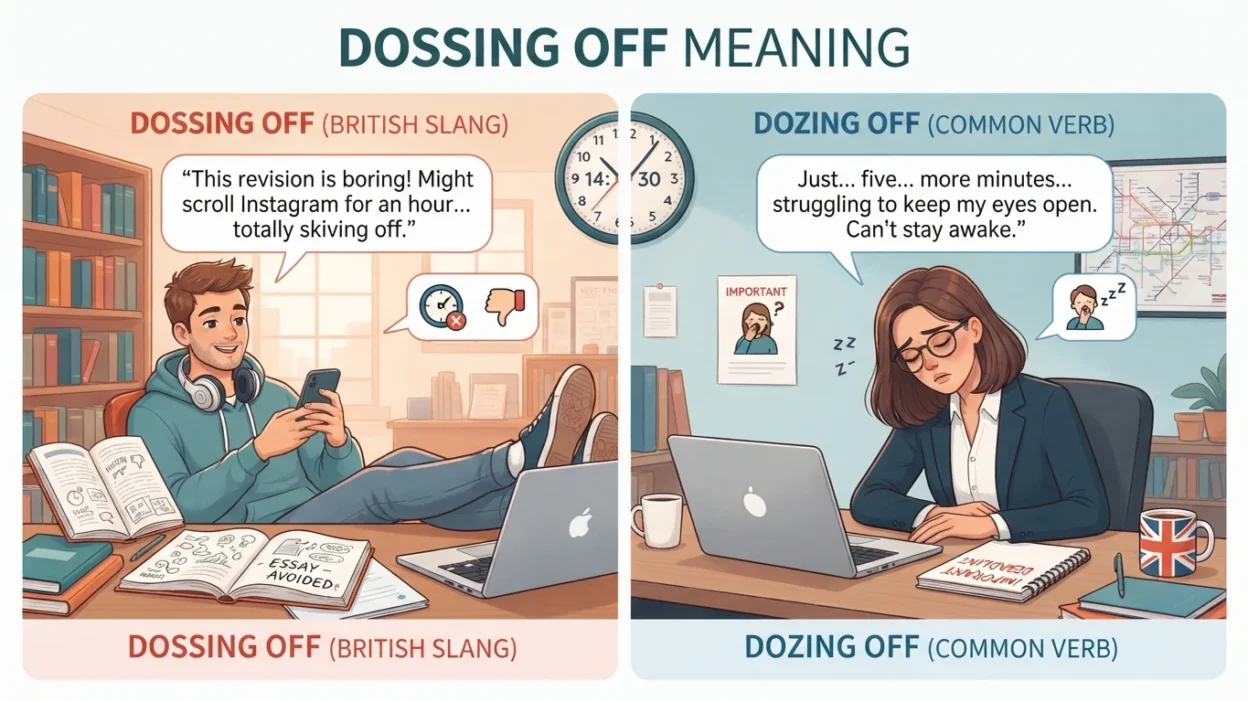
Dossing off → being idle, relaxing, or avoiding work.
Dozing off → gradually falling asleep.
For example:
“He was dossing off instead of studying.”
This suggests he was wasting time or not working.
But:
“He was dozing off during the lecture.”
This means he was beginning to fall asleep.
First Word: Dossing Off
Dossing off comes from the informal British verb doss.
Depending on context, doss can mean:
- To relax
- To spend time doing very little
- To be idle
- To avoid work
- To hang around casually
So, when someone says:
“Stop dossing off and finish your homework.”
they mean:
Stop wasting time and get your work done.
The expression is informal, so it is more appropriate in casual conversation than in formal academic or professional writing.
Examples of “Dossing Off”
- “He’s just dossing off instead of helping.”
- “Stop dossing off and start studying.”
- “They spent the afternoon dossing off.”
- “She was dossing off while everyone else was working.”
Second Word: Dozing Off
Dozing off means gradually falling asleep, usually unintentionally or for a short period.
For example:
“I was dozing off during the movie.”
This means you were becoming sleepy and beginning to fall asleep.
Other examples:
- “I nearly dozed off on the bus.”
- “She was dozing off during the lecture.”
- “He dozed off while watching television.”
- “I keep dozing off because I’m tired.”
If you want to describe someone becoming sleepy, dozing off is the expression you need.
Comparison Table
| Expression | Meaning | Example |
|---|---|---|
| Dossing off | Being idle, wasting time, or relaxing | He was dossing off instead of working. |
| Dozing off | Gradually falling asleep | I was dozing off during the movie. |
| Wasting time | Spending time unproductively | She was wasting time online. |
| Taking a break | Resting temporarily | I’m taking a short break. |
| Nodding off | Falling asleep briefly | He nodded off on the train. |
When to Use Each
Use “Dossing Off” When Someone Is Being Idle
Use dossing off when someone should be doing something but is instead relaxing, hanging around, or wasting time.
“You should be studying, but you’re dossing off.”
The focus is on not being productive.
Use “Dozing Off” When Someone Is Falling Asleep
Use dozing off when someone is becoming sleepy.
“I was so tired that I started dozing off.”
The focus is on sleepiness, not laziness.
A Simple Test
Ask yourself:
“Is the person becoming sleepy?”
- Yes → dozing off
- No, they are just wasting time or being idle → dossing off
Examples of Dossing Off and Dozing Off
Dossing Off
- “He was dossing off instead of doing his assignment.”
- “Stop dossing off and help me clean.”
- “They were dossing off all afternoon.”
- “She got in trouble for dossing off at work.”
- “You can’t keep dossing off when there’s so much to do.”
Dozing Off
- “I started dozing off during the movie.”
- “She was dozing off on the sofa.”
- “I nearly dozed off during the lecture.”
- “He kept dozing off because he hadn’t slept well.”
- “The passenger was dozing off on the bus.”
- “I was so tired that I began dozing off while reading.”
- “She accidentally dozed off while watching TV.”
Common Mistakes
Mistake 1: Using “dossing off” to mean falling asleep
If you mean someone is falling asleep, dozing off is usually correct.
❌ “I was dossing off during the lecture.”
If your intended meaning is that you were becoming sleepy:
✅ “I was dozing off during the lecture.”
Mistake 2: Assuming “doss” always means sleep
Although doss has several informal meanings in British English, dossing off does not normally mean the same thing as dozing off.
Mistake 3: Using the expressions in formal writing
Both expressions are informal.
Instead of:
“The employee was dossing off.”
a formal report might say:
“The employee was not working as required.”
Instead of:
“The student was dozing off.”
a formal description could say:
“The student appeared to be falling asleep.”
Memory Trick
Here is an easy way to remember the difference:
DOSS = DOING LITTLE
Dossing off → doing very little or wasting time.
DOZE = SLEEP
Dozing off → becoming sleepy.
Think:
Dossing = lazy/idle
Dozing = sleepy
This simple distinction can prevent one of the most common vocabulary mix-ups.
American vs British English
Doss is strongly associated with British informal English. American English speakers are less likely to use “dossing off” in everyday conversation.
In American English, people are more likely to say:
- Wasting time
- Slacking off
- Messing around
- Taking it easy
- Doing nothing
For the sleeping meaning, “dozing off” is common in both British and American English.
Similar Words
Slacking Off
Slacking off means avoiding work or not working as hard as you should.
“He’s slacking off instead of studying.”
This is often a closer American-English equivalent to the “being lazy/idle” sense of dossing off.
Wasting Time
This means spending time without doing anything useful.
“She was wasting time on her phone.”
Taking It Easy
This means relaxing and not doing anything demanding.
“I’m taking it easy today.”
Unlike dossing off, taking it easy does not necessarily suggest laziness or avoiding responsibilities.
Dozing Off
This specifically means gradually falling asleep.
“I was dozing off during the film.”
Nodding Off
This also means briefly falling asleep.
“He nodded off during the journey.”
Final Verdict
“Dossing off” and “dozing off” are not the same. In British informal English, dossing off generally refers to being idle, relaxing, or wasting time instead of doing something productive. Dozing off, on the other hand, means gradually falling asleep.
If you are talking about someone who is sleepy, use dozing off. If you are talking about someone who is doing very little or avoiding work, dossing off may fit the context. When in doubt, remember the simple connection: doze = sleep.
FAQs
1. What does “dossing off” mean?
Dossing off is informal British English for being idle, relaxing, or wasting time instead of doing something productive.
2. Does “dossing off” mean sleeping?
Usually, no. If you mean gradually falling asleep, the correct expression is generally “dozing off.”
3. What does “dozing off” mean?
Dozing off means gradually falling asleep, often unintentionally or for a short period.
4. Is “dossing off” British slang?
Yes. Doss and expressions based on it are associated particularly with informal British English.
5. What is the difference between dossing off and slacking off?
Both can describe not working properly. Slacking off is widely understood, while dossing off is more distinctly British and informal.
6. What is the correct phrase for falling asleep?
Use “dozing off” or “nodding off.”
“I was dozing off during class.”
7. Can I use “dossing off” in formal writing?
It is better to avoid it in formal writing. Use expressions such as “being unproductive,” “not working,” or “wasting time,” depending on the intended meaning.
Conclusion
The phrase “dossing off” can be confusing because it looks almost identical to “dozing off.” However, the meanings are different. Dossing off is informal British English associated with being idle, relaxing, or wasting time, while dozing off means gradually falling asleep.
The easiest way to remember the difference is to connect “doze” with sleep. If someone is becoming sleepy, say “dozing off.” If someone is simply hanging around instead of working, “dossing off” may be the appropriate informal expression. Knowing this distinction will help you understand British slang and choose the right phrase in everyday English.
Remember This
Dossing off = being idle / wasting time.
Dozing off = gradually falling asleep.
Memory trick:
DOZE = SLEEP 😴

Miller Rhodes is an American nonfiction writer focused on personal growth and modern entrepreneurship.
His work blends thoughtful analysis with practical strategies for navigating today’s digital world.
He writes to help readers think clearer, act smarter, and build meaningful success.