Expressing agreement clearly and naturally is a key part of effective communication. While “yes” is simple and universal, relying on it too often can make conversations sound repetitive or less engaging. Using varied alternatives helps you match tone, show personality, and communicate more precisely.
The right choice depends on context—formal, casual, professional, or emotional. This guide provides practical alternatives with meanings, usage rules, and real examples so you can confidently replace “yes” in any situation.
Quick Answer
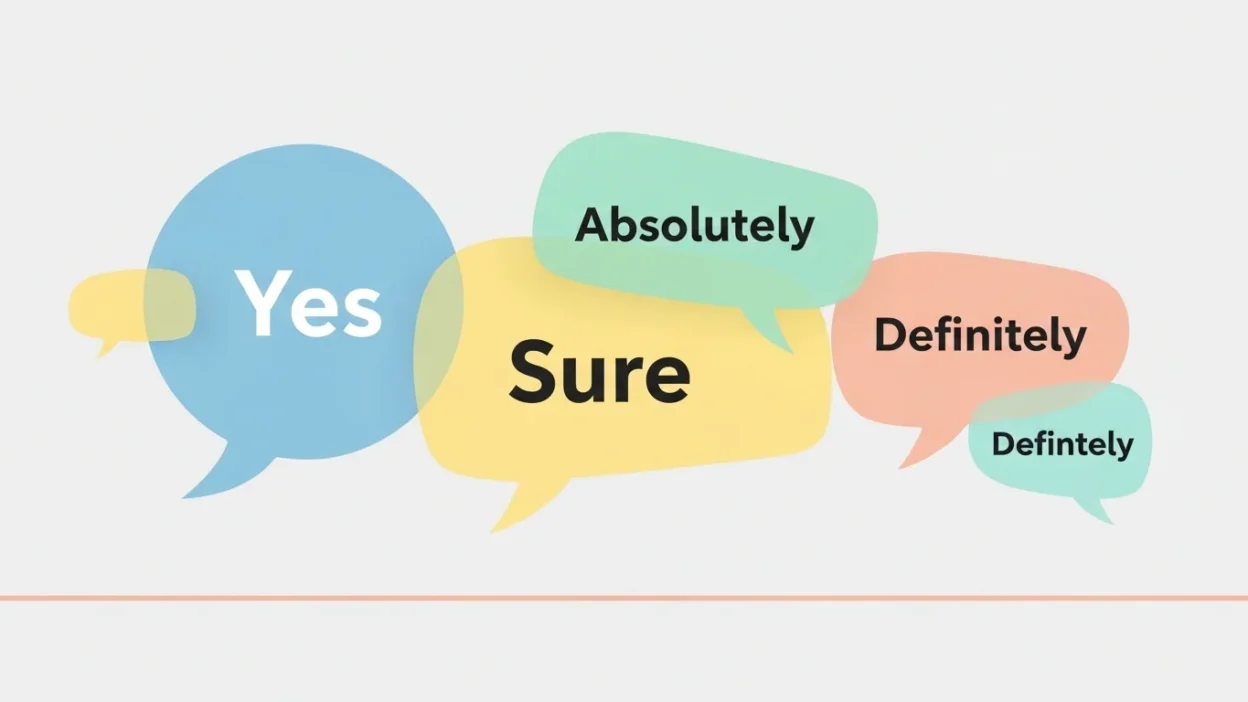
Other ways to say “yes” include “sure,” “absolutely,” “of course,” and “definitely,” depending on tone and context.
Casual and Everyday Alternatives
Sure
Meaning: Agreement or acceptance
Usage: Informal conversations
Example: “Sure, I’ll help you.”
Tip: Friendly and common
Yeah
Meaning: Informal yes
Usage: Casual speech
Example: “Yeah, that’s right.”
Tip: Avoid in formal writing
Yep
Meaning: Relaxed confirmation
Usage: Informal
Example: “Yep, I’m coming.”
Tip: Very casual tone
Of Course
Meaning: Willing agreement
Usage: Casual or semi-formal
Example: “Of course, I can do that.”
Tip: Polite and positive
No Problem
Meaning: Agreeing easily
Usage: Informal
Example: “No problem, I’ll handle it.”
Tip: Friendly tone
Okay
Meaning: Acceptance
Usage: General use
Example: “Okay, let’s go.”
Tip: Neutral tone
Alright
Meaning: Agreement
Usage: Casual
Example: “Alright, I understand.”
Tip: Conversational tone
Professional and Formal Alternatives
Certainly
Meaning: Strong, polite agreement
Usage: Formal or business
Example: “Certainly, I will assist you.”
Tip: Very professional
Absolutely
Meaning: Strong confirmation
Usage: Professional or casual
Example: “Absolutely, that’s correct.”
Tip: Confident tone
Indeed
Meaning: Affirmation
Usage: Formal
Example: “Indeed, that is accurate.”
Tip: Slightly formal
Affirmative
Meaning: Official confirmation
Usage: Military/technical
Example: “Affirmative, proceeding now.”
Tip: Formal context
Agreed
Meaning: Acceptance of idea
Usage: Meetings
Example: “Agreed, we’ll proceed.”
Tip: Professional tone
That Is Correct
Meaning: Confirmation
Usage: Formal
Example: “That is correct.”
Tip: Clear and precise
By All Means
Meaning: Permission/encouragement
Usage: Formal
Example: “By all means, continue.”
Tip: Polite tone
Enthusiastic and Strong Agreement
Definitely
Meaning: Strong yes
Usage: Casual or professional
Example: “Definitely, I’m in.”
Tip: Positive tone
For Sure
Meaning: Confident agreement
Usage: Informal
Example: “For sure, I’ll do it.”
Tip: Friendly
Absolutely Yes
Meaning: Strong emphasis
Usage: Informal
Example: “Absolutely yes!”
Tip: Energetic
Without a Doubt
Meaning: Certain agreement
Usage: Formal/informal
Example: “Without a doubt, it works.”
Tip: Strong tone
No Doubt
Meaning: Confident yes
Usage: Casual
Example: “No doubt about it.”
Tip: Conversational
You Bet
Meaning: Enthusiastic yes
Usage: Informal
Example: “You bet!”
Tip: Friendly
100 Percent
Meaning: Complete agreement
Usage: Casual
Example: “100 percent, I agree.”
Tip: Modern tone
Polite and Indirect Alternatives
I Think So
Meaning: Soft agreement
Usage: Casual
Example: “I think so.”
Tip: Not strong
Sounds Good
Meaning: Accepting suggestion
Usage: Casual/professional
Example: “Sounds good to me.”
Tip: Friendly tone
That Works
Meaning: Agreement with plan
Usage: General
Example: “That works for me.”
Tip: Practical
I’m Fine With That
Meaning: Accepting decision
Usage: Casual
Example: “I’m fine with that.”
Tip: Neutral
I’d Be Happy To
Meaning: Willing agreement
Usage: Polite
Example: “I’d be happy to help.”
Tip: Professional
Why Not
Meaning: Casual acceptance
Usage: Informal
Example: “Why not, let’s go.”
Tip: Light tone
If That’s Okay
Meaning: Soft agreement
Usage: Polite
Example: “If that’s okay, I’ll proceed.”
Tip: Respectful tone
Business and Email Alternatives
Confirmed
Meaning: Official agreement
Usage: Emails
Example: “Meeting confirmed.”
Tip: Clear and concise
Approved
Meaning: Formal acceptance
Usage: Workplace
Example: “Your request is approved.”
Tip: Authority tone
Accepted
Meaning: Agreement
Usage: Professional
Example: “Proposal accepted.”
Tip: Formal
Noted
Meaning: Acknowledgment
Usage: Emails
Example: “Noted, thank you.”
Tip: Brief tone
Understood
Meaning: Agreement and comprehension
Usage: Professional
Example: “Understood, I’ll proceed.”
Tip: Clear tone
Will Do
Meaning: Agreement to act
Usage: Informal/work
Example: “Will do.”
Tip: Short and effective
Consider It Done
Meaning: Commitment
Usage: Casual/work
Example: “Consider it done.”
Tip: Confident tone
Emotional and Supportive Alternatives
I’d Love To
Meaning: Enthusiastic agreement
Usage: Personal
Example: “I’d love to join.”
Tip: Warm tone
That Sounds Great
Meaning: Positive agreement
Usage: Casual
Example: “That sounds great!”
Tip: Friendly
I’m In
Meaning: Commitment
Usage: Informal
Example: “I’m in for the plan.”
Tip: Confident
Happy To Help
Meaning: Willingness
Usage: Professional/personal
Example: “Happy to help.”
Tip: Polite
Gladly
Meaning: Willing agreement
Usage: Slightly formal
Example: “Gladly, I’ll assist.”
Tip: Warm tone
With Pleasure
Meaning: Polite agreement
Usage: Formal
Example: “With pleasure.”
Tip: Professional
It Would Be My Pleasure
Meaning: Respectful willingness
Usage: Formal
Example: “It would be my pleasure.”
Tip: Very polite
Placement and Grammar Rules Table
| Phrase | Tone | Example |
|---|---|---|
| Sure | Casual | Sure, I’ll help you |
| Certainly | Formal | Certainly, I’ll assist you |
| Absolutely | Confident | Absolutely, that’s correct |
Common Mistakes
Using overly casual words like “yeah” in formal emails can seem unprofessional. Overusing strong affirmations like “absolutely” may sound exaggerated. Using weak phrases in serious situations can create confusion. Always match tone with context and audience.
Practical Example Paragraphs
“Certainly, I can complete this task today. Absolutely, I agree with your suggestion, and I’ll make sure everything is handled promptly.”
“Sure, I’ll join you later. Sounds good, and I’m looking forward to it.”
FAQs
What is the best alternative to “yes”?
“Absolutely” and “certainly” are among the most versatile options.
Is “yeah” appropriate in professional settings?
No, it is too informal for professional communication.
What should I use in emails instead of “yes”?
Use “certainly,” “confirmed,” or “understood.”
Are enthusiastic alternatives acceptable at work?
Yes, but use them carefully depending on tone.
How do I sound polite when agreeing?
Use phrases like “I’d be happy to” or “with pleasure.”
Final Thoughts
Using other ways to say yes helps you communicate more effectively by adding variety, clarity, and tone awareness.
It allows you to adapt your responses depending on the situation.
By choosing the right alternative, you can improve both personal and professional communication while making your responses more engaging and meaningful.