Clear communication often depends on how effectively you highlight important information. The phrase “please note” is widely used in emails, reports, and professional writing, but overusing it can make your message sound repetitive or overly formal.
That’s why learning other ways to say “please note” can significantly improve your tone and clarity.
Whether you’re writing a business email, academic paper, or casual message, using varied expressions helps you sound more natural, professional, and engaging.
This guide provides powerful alternatives, explains how to use them correctly, and ensures your communication remains effective and polished.
By the end of this article, you’ll have a complete toolkit of alternatives to “please note,” along with usage tips, examples, and practical strategies to enhance your writing.
Quick Answer
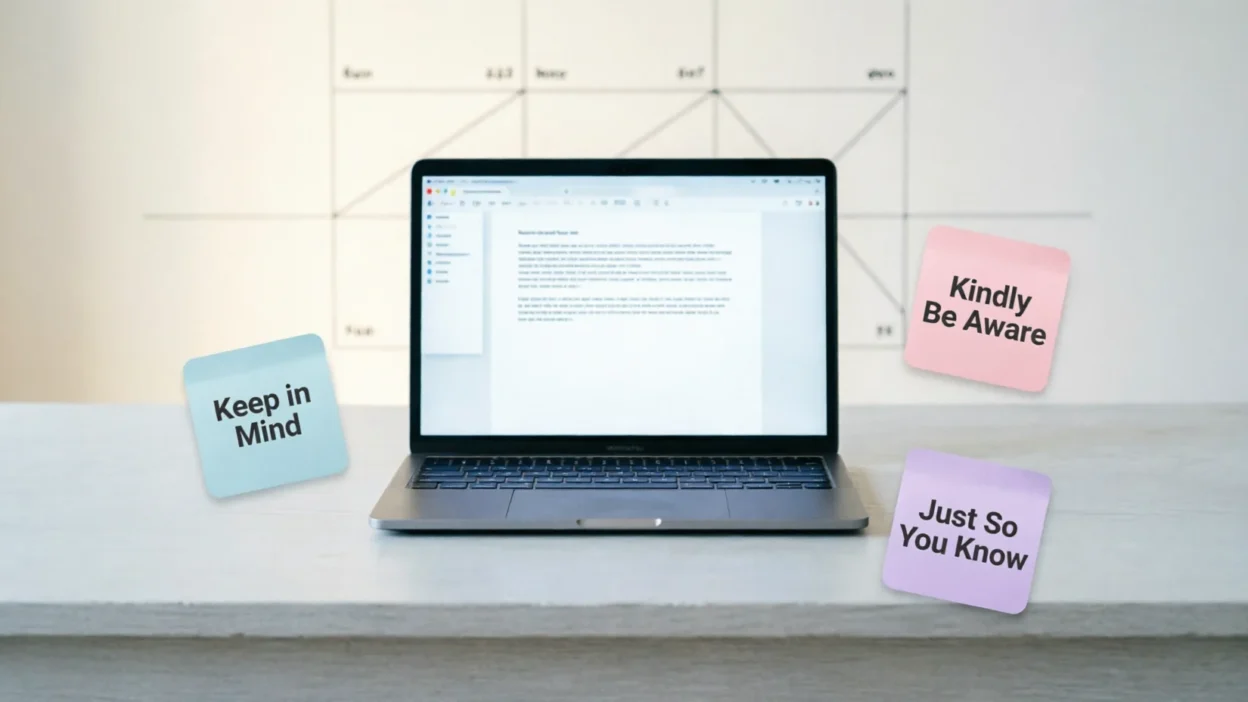
You can replace “please note” with phrases like “kindly be aware,” “keep in mind,” “it is important to mention,” or “take note that,” depending on tone and context.
Formal Alternatives to “Please Note”
Kindly Be Aware
Meaning: A polite way to draw attention to important information.
Usage: Use in formal emails or notices.
Example: Kindly be aware that the deadline has been extended.
Notes: Sounds professional but slightly formal.
It Should Be Noted
Meaning: Emphasizes an important point formally.
Usage: Common in academic or official writing.
Example: It should be noted that results may vary.
Notes: Avoid overuse in casual writing.
Please Be Advised
Meaning: Official way to inform someone.
Usage: Legal or business communication.
Example: Please be advised that the office will remain closed tomorrow.
Notes: Very formal tone.
Take Note That
Meaning: Direct instruction to pay attention.
Usage: Reports or instructions.
Example: Take note that all entries must be submitted online.
Notes: Slightly authoritative.
It Is Important To Mention
Meaning: Highlights significance.
Usage: Professional writing.
Example: It is important to mention that this policy applies globally.
Notes: Balanced tone.
Kindly Note
Meaning: Shortened version of “please note.”
Usage: Emails and notices.
Example: Kindly note the updated schedule.
Notes: Polite and concise.
Be Informed That
Meaning: Formal notification.
Usage: Official communication.
Example: Be informed that your request has been approved.
Notes: Common in corporate settings.
Casual Alternatives to “Please Note”
Just So You Know
Meaning: Informal way to share information.
Usage: Conversations or casual emails.
Example: Just so you know, the meeting starts at 3 PM.
Notes: Friendly tone.
Keep In Mind
Meaning: Suggests remembering something.
Usage: Everyday communication.
Example: Keep in mind that traffic may delay you.
Notes: Versatile.
Remember That
Meaning: Reminds someone of something important.
Usage: Informal or semi-formal.
Example: Remember that practice is key to success.
Notes: Simple and clear.
Don’t Forget
Meaning: Strong reminder.
Usage: Casual settings.
Example: Don’t forget to bring your ID.
Notes: Direct tone.
FYI (For Your Information)
Meaning: Shares information without urgency.
Usage: Emails or chats.
Example: FYI, the report has been updated.
Notes: Avoid in formal writing.
Heads Up
Meaning: Warns or informs in advance.
Usage: Informal conversations.
Example: Heads up, the system will be down tonight.
Notes: Friendly tone.
Just A Reminder
Meaning: Gentle reminder.
Usage: Emails or messages.
Example: Just a reminder that your payment is due tomorrow.
Notes: Polite and soft.
Professional Email Alternatives
Kindly Take Into Consideration
Meaning: Requests attention politely.
Usage: Business emails.
Example: Kindly take into consideration the revised timeline.
Notes: Professional tone.
Please Be Reminded
Meaning: Reminder in formal tone.
Usage: Workplace communication.
Example: Please be reminded of the upcoming deadline.
Notes: Common in corporate emails.
I Would Like To Highlight
Meaning: Emphasizes a point.
Usage: Reports and emails.
Example: I would like to highlight the key findings.
Notes: Engaging tone.
It Is Worth Mentioning
Meaning: Adds important detail.
Usage: Professional writing.
Example: It is worth mentioning that sales increased.
Notes: Neutral tone.
Allow Me To Point Out
Meaning: Draws attention politely.
Usage: Presentations or emails.
Example: Allow me to point out a critical issue.
Notes: Slightly formal.
Please Keep In Mind
Meaning: Suggests remembering something.
Usage: Emails.
Example: Please keep in mind the budget constraints.
Notes: Balanced tone.
Let Me Remind You
Meaning: Direct reminder.
Usage: Professional or casual.
Example: Let me remind you of the meeting schedule.
Notes: Slightly assertive.
Academic & Writing Alternatives
It Is Evident That
Meaning: Indicates clear information.
Usage: Academic writing.
Example: It is evident that the results support the hypothesis.
Notes: Formal tone.
As Observed
Meaning: Refers to visible data.
Usage: Research writing.
Example: As observed, the trend is increasing.
Notes: Concise.
It Can Be Seen That
Meaning: Highlights visible information.
Usage: Reports.
Example: It can be seen that growth has slowed.
Notes: Neutral tone.
Notably
Meaning: Emphasizes importance.
Usage: Academic writing.
Example: Notably, the results differ significantly.
Notes: Formal and concise.
Importantly
Meaning: Highlights key point.
Usage: Essays and reports.
Example: Importantly, the policy affects all users.
Notes: Strong emphasis.
Significantly
Meaning: Indicates importance.
Usage: Research writing.
Example: Significantly, the data shows improvement.
Notes: Analytical tone.
It Is Crucial To Note
Meaning: Strong emphasis.
Usage: Academic or formal writing.
Example: It is crucial to note the limitations.
Notes: Use sparingly.
Friendly & Conversational Alternatives
By The Way
Meaning: Adds extra information.
Usage: Casual conversation.
Example: By the way, your package arrived.
Notes: Informal tone.
Just To Let You Know
Meaning: Informal information sharing.
Usage: Chats or emails.
Example: Just to let you know, I’ll be late.
Notes: Friendly.
As A Reminder
Meaning: Gentle reminder.
Usage: Casual or professional.
Example: As a reminder, the event starts soon.
Notes: Polite tone.
You Should Know
Meaning: Direct information.
Usage: Conversations.
Example: You should know the rules before starting.
Notes: Slightly assertive.
Quick Note
Meaning: Brief information.
Usage: Emails or chats.
Example: Quick note, the time has changed.
Notes: Concise.
Just Saying
Meaning: Casual comment.
Usage: Informal chats.
Example: Just saying, this might help.
Notes: Very casual.
Worth Noting
Meaning: Highlights importance.
Usage: Semi-formal writing.
Example: Worth noting, the policy has changed.
Notes: Versatile.
Placement & Grammar Rules Table
| Synonym or Phrase | Sentence Position | Tone/Formality | Example Sentence |
|---|---|---|---|
| Kindly be aware | Beginning | Formal | Kindly be aware of the new rules. |
| Keep in mind | Middle | Neutral | Keep in mind the deadline is near. |
| Just so you know | Beginning | Informal | Just so you know, we’ve updated the plan. |
| It is important to mention | Beginning | Formal | It is important to mention the risks. |
| FYI | Beginning | Informal | FYI, the meeting is canceled. |
| Notably | Middle | Formal | The results, notably, improved. |
| As a reminder | Beginning | Neutral | As a reminder, submit your work today. |
Common Mistakes
One common mistake is overusing “please note” repeatedly in the same document, which can make writing sound robotic. Another issue is using overly formal alternatives like “please be advised” in casual conversations, which may feel unnatural. Misplacing phrases within a sentence can also reduce clarity, such as inserting them awkwardly in the middle without proper punctuation. Additionally, mixing formal and informal tones in the same message can confuse readers. To avoid these errors, always match the phrase to your audience, maintain consistency in tone, and use alternatives sparingly but effectively.
Practical Example Paragraphs
In a professional email, instead of repeatedly saying “please note,” you could write: “Kindly be aware that the deadline has been moved to Friday. As a reminder, all documents must be submitted before 5 PM. It is important to mention that late submissions will not be accepted. Keep in mind that the system may experience delays during peak hours.” This variation improves readability and keeps the message engaging.
In a casual setting, you might say: “Just so you know, we’re meeting earlier today. Don’t forget to bring your notes, and keep in mind that traffic might be heavy.” This approach sounds natural and friendly while still delivering important information.
FAQs
What is a formal alternative to “please note”?
Formal alternatives include “kindly be aware,” “please be advised,” and “it should be noted.”
Can I use “FYI” instead of “please note”?
Yes, but only in informal or semi-formal contexts, not in official documents.
Is “please note” too formal?
It depends on context; it can sound overly formal in casual communication.
What is the best casual alternative?
“Just so you know” or “keep in mind” works well in everyday conversations.
How do I avoid repetition?
Use a variety of synonyms and adjust tone based on audience and purpose.
Final Thoughts
Using different ways to say “please note” can transform your communication, making it clearer, more engaging, and better suited to your audience. Whether you’re writing professionally or casually, choosing the right phrase enhances both tone and effectiveness.
By applying these alternatives strategically, you not only avoid repetition but also demonstrate strong communication skills. Mastering these variations ensures your writing remains polished, impactful, and reader-friendly in every context.

Watson Maddox is a leadership and mindset writer known for his bold, straightforward voice.
He shares lessons on resilience, discipline, and high performance drawn from real-world experience.
His mission is simple: build strength, take action, and never settle for average.