
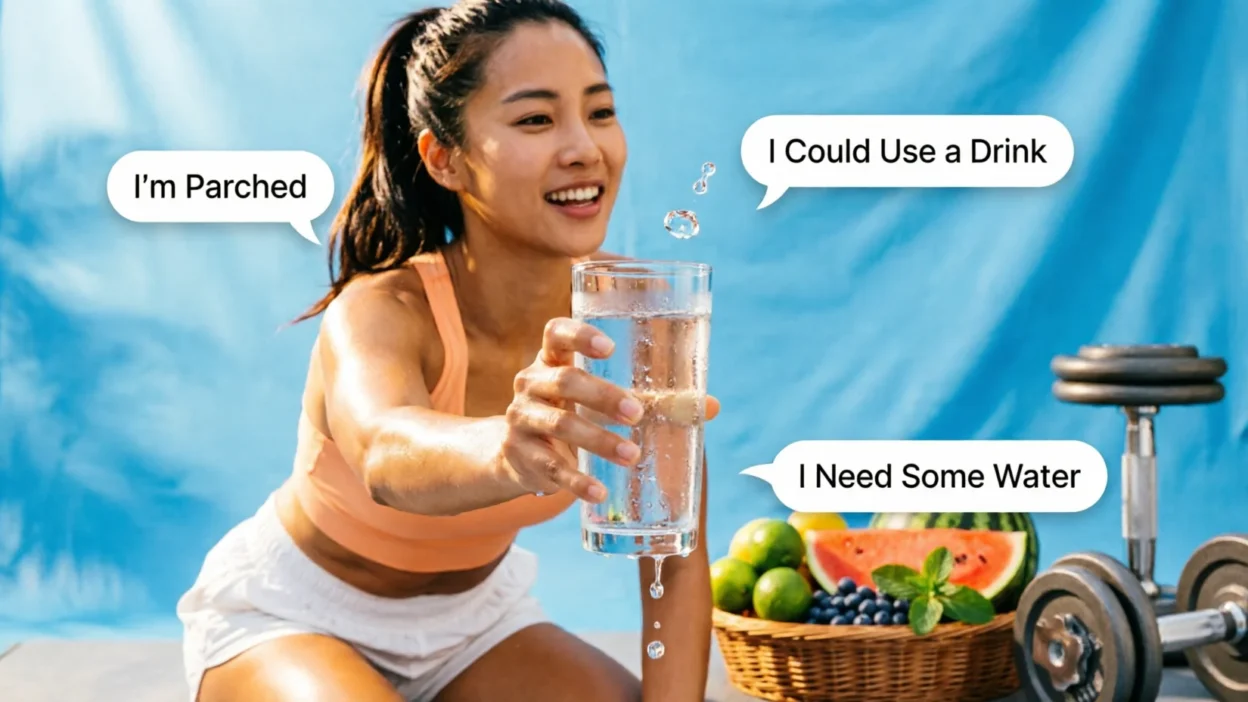
Feeling thirsty is a common experience, and most people simply say “I’m thirsty” when they want something to drink. While there’s nothing wrong with this phrase, using different expressions can make your conversations more engaging, descriptive, humorous, or appropriate for specific situations.
Learning other ways to say I’m thirsty can help you communicate more naturally in casual conversations, creative writing, social media posts, and even professional settings. Some alternatives emphasize mild thirst, while others express an urgent need for a drink.
Quick Answer
Other ways to say “I’m thirsty” include I could use a drink, I need some water, My mouth is dry, I’m parched, and I’m dying of thirst. The best choice depends on the situation and level of thirst.
Common Alternatives to I’m Thirsty
I Could Use a Drink
Meaning: You would like something to drink.
Usage Rule: Casual conversations.
Example: “It’s hot outside. I could use a drink.”
Tip: Works for water, juice, or other beverages.
I Need Some Water
Meaning: You want water specifically.
Usage Rule: Everyday situations.
Example: “I need some water after that workout.”
Tip: Direct and clear.
My Mouth Is Dry
Meaning: Your mouth lacks moisture.
Usage Rule: Describing physical thirst.
Example: “My mouth is dry. Do you have water?”
Tip: Focuses on the sensation.
I’d Love Something to Drink
Meaning: You would enjoy a beverage.
Usage Rule: Polite conversations.
Example: “I’d love something to drink right now.”
Tip: Friendly and courteous.
I Feel Dehydrated
Meaning: You need fluids.
Usage Rule: Health-related discussions.
Example: “I feel dehydrated after being in the sun.”
Tip: More formal than “I’m thirsty.”
I Need a Refreshment
Meaning: You want a drink to feel refreshed.
Usage Rule: Casual and semi-formal situations.
Example: “I need a refreshment after that meeting.”
Tip: Slightly more sophisticated.
I Could Go for Some Water
Meaning: Water sounds appealing.
Usage Rule: Informal conversations.
Example: “I could go for some water right now.”
Tip: Natural and conversational.
Strong Ways to Express Thirst
I’m Parched
Meaning: Extremely thirsty.
Usage Rule: Casual and creative writing.
Example: “I’ve been walking for hours. I’m parched.”
Tip: Strong and expressive alternative.
I’m Dying of Thirst
Meaning: You feel extremely thirsty.
Usage Rule: Informal conversations.
Example: “I’m dying of thirst after that hike.”
Tip: Usually used figuratively.
I Need a Drink ASAP
Meaning: You want a drink immediately.
Usage Rule: Casual speech.
Example: “I need a drink ASAP.”
Tip: Expresses urgency.
I’m Completely Dehydrated
Meaning: You feel very thirsty.
Usage Rule: Informal and health discussions.
Example: “I’m completely dehydrated after the game.”
Tip: Strong emphasis.
My Throat Is So Dry
Meaning: Your throat feels uncomfortable.
Usage Rule: Everyday communication.
Example: “My throat is so dry. I need water.”
Tip: Describes physical symptoms.
I Need Hydration
Meaning: Your body needs fluids.
Usage Rule: Fitness and health contexts.
Example: “I need hydration after that run.”
Tip: Common among athletes.
I Can’t Wait for a Drink
Meaning: You strongly want something to drink.
Usage Rule: Casual conversations.
Example: “I can’t wait for a cold drink.”
Tip: Highlights anticipation.
Polite Alternatives to I’m Thirsty
May I Have Some Water?
Meaning: A courteous request for water.
Usage Rule: Formal and polite situations.
Example: “May I have some water, please?”
Tip: More polite than simply stating thirst.
Could I Get Something to Drink?
Meaning: Requesting a beverage.
Usage Rule: Restaurants and social events.
Example: “Could I get something to drink?”
Tip: Professional and respectful.
I’d Appreciate a Glass of Water
Meaning: A polite request.
Usage Rule: Formal conversations.
Example: “I’d appreciate a glass of water.”
Tip: Suitable for professional settings.
Would It Be Possible to Get a Drink?
Meaning: A respectful request.
Usage Rule: Formal situations.
Example: “Would it be possible to get a drink?”
Tip: Very courteous.
A Glass of Water Would Be Nice
Meaning: Suggesting you’d like water.
Usage Rule: Casual and polite communication.
Example: “A glass of water would be nice.”
Tip: Gentle and friendly.
I’d Love Some Water
Meaning: Expressing a desire for water.
Usage Rule: Everyday conversations.
Example: “I’d love some water if you have any.”
Tip: Warm and polite.
Can I Grab a Drink?
Meaning: Asking permission to get a beverage.
Usage Rule: Informal settings.
Example: “Can I grab a drink before we start?”
Tip: Common conversational phrase.
Funny Alternatives to I’m Thirsty
I Need Water Like a Fish
Meaning: You desperately want water.
Usage Rule: Humorous conversations.
Example: “I need water like a fish right now.”
Tip: Playful expression.
My Water Bottle Doesn’t Stand a Chance
Meaning: You’re very thirsty.
Usage Rule: Casual humor.
Example: “My water bottle doesn’t stand a chance today.”
Tip: Great for social media.
I’m Running on Empty
Meaning: You need replenishment.
Usage Rule: Informal conversations.
Example: “I’m running on empty and need a drink.”
Tip: Can also refer to energy.
I Could Drink a River
Meaning: You are extremely thirsty.
Usage Rule: Humorous situations.
Example: “I could drink a river after that workout.”
Tip: Exaggerated for effect.
My Throat Feels Like a Desert
Meaning: Your throat is very dry.
Usage Rule: Casual conversations.
Example: “My throat feels like a desert.”
Tip: Vivid imagery.
Time to Refill the Tank
Meaning: You need fluids.
Usage Rule: Informal speech.
Example: “Time to refill the tank.”
Tip: Fun metaphor.
Water, Please—Immediately
Meaning: Urgent desire for water.
Usage Rule: Playful conversations.
Example: “Water, please—immediately!”
Tip: Dramatic and humorous.
Creative Alternatives for Writing
My Lips Felt Dry
Meaning: A descriptive sign of thirst.
Usage Rule: Creative writing.
Example: “My lips felt dry after hours in the sun.”
Tip: Creates vivid imagery.
Every Sip Sounded Amazing
Meaning: You strongly wanted a drink.
Usage Rule: Storytelling.
Example: “Every sip sounded amazing after the long hike.”
Tip: Sensory description.
I Longed for a Cold Drink
Meaning: You strongly desired a beverage.
Usage Rule: Narrative writing.
Example: “I longed for a cold drink in the heat.”
Tip: More literary.
My Body Craved Water
Meaning: Your body needed hydration.
Usage Rule: Descriptive writing.
Example: “My body craved water after the marathon.”
Tip: Strong sensory language.
I Yearned for Refreshment
Meaning: You wanted a drink.
Usage Rule: Formal storytelling.
Example: “I yearned for refreshment after the journey.”
Tip: Elegant alternative.
The Heat Left Me Thirsty
Meaning: Heat caused thirst.
Usage Rule: Narrative descriptions.
Example: “The heat left me thirsty and exhausted.”
Tip: Natural storytelling phrase.
I Needed Something Cold to Drink
Meaning: You wanted a refreshing beverage.
Usage Rule: Everyday and creative writing.
Example: “I needed something cold to drink immediately.”
Tip: Clear and relatable.
Placement and Grammar Rules Table
| Phrase | Tone | Example |
|---|---|---|
| I Could Use a Drink | Casual | I could use a drink after work |
| I’m Parched | Expressive | I’m parched after that walk |
| May I Have Some Water? | Polite | May I have some water, please? |
Common Mistakes
Using Slang in Formal Situations
Meaning: Informal phrases may sound unprofessional.
Usage Rule: Use polite alternatives in formal settings.
Example: Say “May I have some water?” instead of “I’m dying of thirst.”
Tip: Match the tone to the audience.
Exaggerating Too Often
Meaning: Strong expressions lose impact when overused.
Usage Rule: Reserve dramatic phrases for emphasis.
Example: Use “I’m thirsty” for ordinary situations.
Tip: Keep communication authentic.
Confusing Thirst with Hunger
Meaning: The sensations can sometimes feel similar.
Usage Rule: Identify what your body needs.
Example: Drink water before assuming you’re hungry.
Tip: Stay hydrated.
Choosing the Wrong Context
Meaning: Some phrases fit casual speech better than formal communication.
Usage Rule: Select expressions carefully.
Example: “I’m parched” is more conversational than business-oriented.
Tip: Consider the setting.
Overcomplicating Simple Statements
Meaning: Not every situation requires creative wording.
Usage Rule: Use direct language when clarity matters.
Example: “I need some water” is often sufficient.
Tip: Simplicity is effective.
Practical Example Paragraphs
“After spending the afternoon outdoors in the summer heat, I was completely exhausted. My throat felt dry, and I could use a drink more than anything. The first sip of cold water was incredibly refreshing.”
“Following a long workout session, I felt dehydrated and knew it was time to hydrate. I grabbed a bottle of water and focused on replenishing the fluids my body needed.”
FAQs
What is a formal way to say I’m thirsty?
“May I have some water?” and “I’d appreciate a glass of water” are polite formal alternatives.
What does I’m parched mean?
“I’m parched” means you are extremely thirsty.
What is a funny way to say I’m thirsty?
“I could drink a river” and “my throat feels like a desert” are humorous alternatives.
What is a professional alternative to I’m thirsty?
“I could use some water” or “I feel dehydrated” work well in professional settings.
Is I’m dying of thirst literal?
Usually no. It is commonly used as an exaggeration to express strong thirst.
Final Thoughts
Using other ways to say I’m thirsty can make your conversations, writing, and storytelling more engaging and expressive. Different alternatives allow you to communicate varying levels of thirst while matching the tone of the situation.
Whether you’re speaking casually, writing creatively, or making a polite request, having a variety of expressions helps you communicate naturally and effectively.

Watson Maddox is a leadership and mindset writer known for his bold, straightforward voice.
He shares lessons on resilience, discipline, and high performance drawn from real-world experience.
His mission is simple: build strength, take action, and never settle for average.