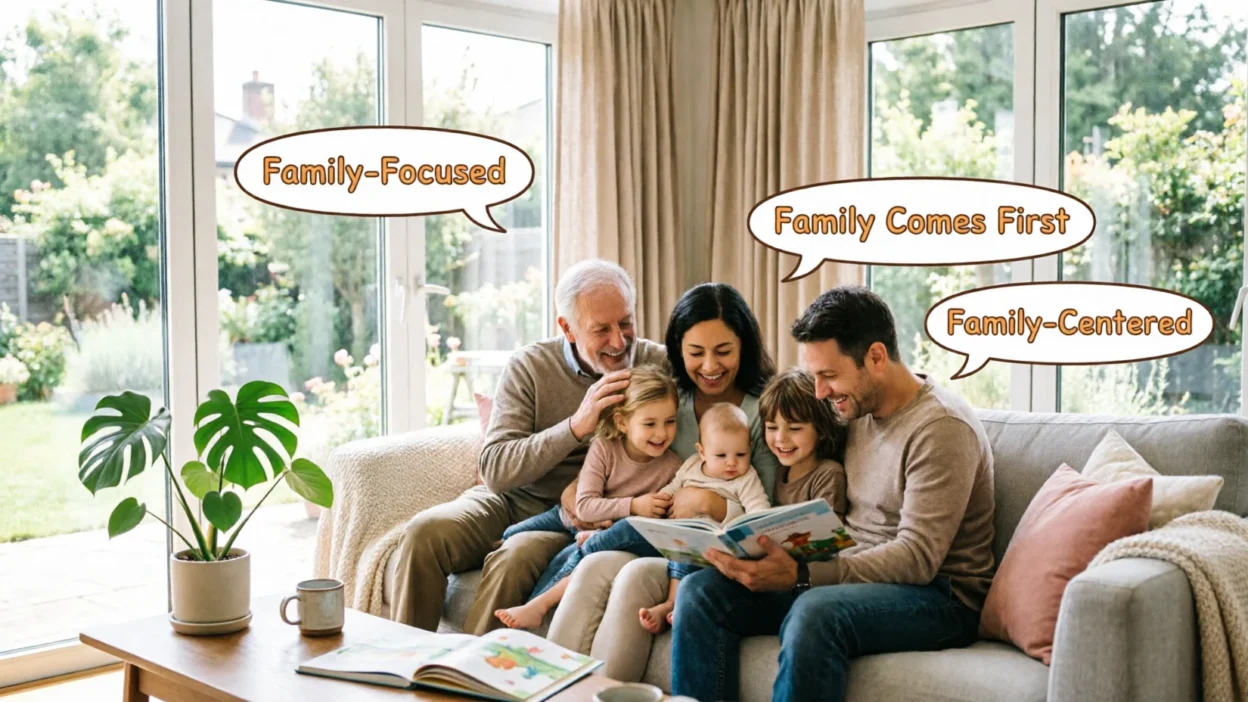
The term “family oriented” is widely used to describe people, businesses, workplaces, communities, events, and values that prioritize family relationships and family-friendly environments. While the phrase is clear and meaningful, using it repeatedly can make your writing sound repetitive, especially in resumes, company descriptions, dating profiles, and marketing content.
Learning other ways to say family oriented can help you communicate warmth, responsibility, strong values, and a commitment to family life more effectively. The right alternative can also help you tailor your message to professional, personal, or promotional contexts.
Quick Answer
Other ways to say “family oriented” include family-focused, family-centered, family-friendly, community-minded, relationship-driven, home-focused, and devoted to family values. The best choice depends on the context and audience.
Professional Alternatives to Family Oriented
Family-Focused
Meaning: Giving priority to family needs and relationships.
Usage Rule: Workplace, community, and personal descriptions.
Example: “The company maintains a family-focused culture.”
Tip: One of the closest alternatives.
Family-Centered
Meaning: Built around family values and support.
Usage Rule: Organizations, services, and personal profiles.
Example: “The program offers a family-centered approach.”
Tip: Common in healthcare and education.
Family-Friendly
Meaning: Suitable and welcoming for families.
Usage Rule: Businesses, events, and communities.
Example: “The resort provides a family-friendly atmosphere.”
Tip: Ideal for marketing content.
Relationship-Driven
Meaning: Focused on building meaningful connections.
Usage Rule: Professional and personal settings.
Example: “The organization is relationship-driven.”
Tip: Broader than family-oriented.
Community-Minded
Meaning: Caring about families and the wider community.
Usage Rule: Business and civic discussions.
Example: “The company is community-minded and supportive.”
Tip: Highlights social responsibility.
People-Centered
Meaning: Prioritizing people and relationships.
Usage Rule: Corporate and leadership contexts.
Example: “Their leadership style is people-centered.”
Tip: Professional and inclusive.
Values-Driven
Meaning: Guided by strong principles.
Usage Rule: Workplace and personal branding.
Example: “She is a values-driven leader.”
Tip: Effective on resumes and bios.
Personal Alternatives to Family Oriented
Devoted to Family
Meaning: Deeply committed to family relationships.
Usage Rule: Personal introductions and biographies.
Example: “He is devoted to family and community.”
Tip: Warm and sincere.
Family Comes First
Meaning: Family is the highest priority.
Usage Rule: Casual and personal communication.
Example: “For her, family comes first.”
Tip: Clear and relatable.
Home-Focused
Meaning: Spending attention and energy on home life.
Usage Rule: Personal profiles.
Example: “She leads a home-focused lifestyle.”
Tip: Emphasizes domestic priorities.
Family-Driven
Meaning: Motivated by family values and goals.
Usage Rule: Personal and professional contexts.
Example: “He is family-driven and hardworking.”
Tip: Modern alternative.
Dedicated to Loved Ones
Meaning: Committed to family and close relationships.
Usage Rule: Personal descriptions.
Example: “She is dedicated to her loved ones.”
Tip: Broader than family-specific language.
Strong Family Values
Meaning: Guided by principles centered on family.
Usage Rule: Bios and introductions.
Example: “He was raised with strong family values.”
Tip: Frequently used in personal branding.
Family-Minded
Meaning: Thinking about family needs and priorities.
Usage Rule: Informal and professional communication.
Example: “She’s a family-minded individual.”
Tip: Direct alternative.
Workplace Alternatives to Family Oriented
Employee-and-Family Focused
Meaning: Supporting employees and their families.
Usage Rule: Company culture descriptions.
Example: “We maintain an employee-and-family-focused workplace.”
Tip: Great for HR content.
Supportive of Work-Life Balance
Meaning: Encouraging healthy family and work priorities.
Usage Rule: Corporate communication.
Example: “The company is supportive of work-life balance.”
Tip: Popular workplace phrase.
Caring Culture
Meaning: Promoting support and compassion.
Usage Rule: Business and organizational descriptions.
Example: “The organization fosters a caring culture.”
Tip: Professional and appealing.
People-First
Meaning: Prioritizing people over processes.
Usage Rule: Corporate branding.
Example: “The company follows a people-first philosophy.”
Tip: Modern business term.
Relationship-Oriented
Meaning: Focused on long-term personal connections.
Usage Rule: Workplace and leadership discussions.
Example: “The team is highly relationship-oriented.”
Tip: Professional and versatile.
Inclusive and Supportive
Meaning: Welcoming and caring toward individuals and families.
Usage Rule: Company culture descriptions.
Example: “We offer an inclusive and supportive environment.”
Tip: Positive and broad.
Family-Conscious
Meaning: Considering family responsibilities.
Usage Rule: HR and workplace policies.
Example: “The company maintains family-conscious policies.”
Tip: Useful in professional writing.
Community and Lifestyle Alternatives
Family-Based
Meaning: Built around family participation.
Usage Rule: Events and organizations.
Example: “The festival offers family-based activities.”
Tip: Clear and descriptive.
Family-Value Driven
Meaning: Guided by traditional family principles.
Usage Rule: Community and business content.
Example: “The organization is family-value driven.”
Tip: Strong emphasis on values.
Home-and-Family Focused
Meaning: Prioritizing domestic life.
Usage Rule: Lifestyle content.
Example: “The magazine targets home-and-family-focused readers.”
Tip: Useful in marketing.
Neighborly
Meaning: Friendly and community-oriented.
Usage Rule: Community descriptions.
Example: “The neighborhood has a neighborly atmosphere.”
Tip: Implies family friendliness.
Welcoming to Families
Meaning: Suitable for people with families.
Usage Rule: Business and travel content.
Example: “The attraction is welcoming to families.”
Tip: Natural and descriptive.
Community-Focused
Meaning: Supporting families and local residents.
Usage Rule: Business and nonprofit organizations.
Example: “The business remains community-focused.”
Tip: Strong marketing term.
Family-Conscious Environment
Meaning: Designed with families in mind.
Usage Rule: Schools, workplaces, and businesses.
Example: “The school offers a family-conscious environment.”
Tip: Professional and specific.
Creative Alternatives to Family Oriented
Rooted in Family Values
Meaning: Deeply connected to family principles.
Usage Rule: Personal and business branding.
Example: “The company is rooted in family values.”
Tip: Strong emotional appeal.
Built Around Family
Meaning: Designed to support family life.
Usage Rule: Marketing and lifestyle content.
Example: “The community is built around family.”
Tip: Simple and effective.
Heart of the Home
Meaning: Closely connected to family life.
Usage Rule: Creative writing.
Example: “She is the heart of the home.”
Tip: Warm and emotional.
Family at the Core
Meaning: Family is central to priorities.
Usage Rule: Personal and organizational messaging.
Example: “Family is at the core of everything we do.”
Tip: Powerful branding phrase.
Centered on Togetherness
Meaning: Focused on family unity.
Usage Rule: Lifestyle and community content.
Example: “The event is centered on togetherness.”
Tip: Positive and inclusive.
Committed to Meaningful Relationships
Meaning: Valuing close personal connections.
Usage Rule: Personal and professional descriptions.
Example: “He is committed to meaningful relationships.”
Tip: Broad and versatile.
Focused on What Matters Most
Meaning: Prioritizing family and important relationships.
Usage Rule: Marketing and personal branding.
Example: “They remain focused on what matters most.”
Tip: Inspirational and memorable.
Placement and Grammar Rules Table
| Phrase | Tone | Example |
|---|---|---|
| Family-Focused | Professional | The company maintains a family-focused culture |
| Family Comes First | Casual | For her, family comes first |
| Family-Friendly | Marketing | The resort offers a family-friendly environment |
Common Mistakes
Using Family-Friendly and Family-Oriented Interchangeably
Meaning: The terms are related but not identical.
Usage Rule: Family-friendly describes suitability, while family-oriented describes values.
Example: A restaurant can be family-friendly without being family-oriented.
Tip: Choose carefully.
Overusing the Phrase
Meaning: Repetition reduces impact.
Usage Rule: Alternate with suitable synonyms.
Example: Use “family-focused” or “family-centered.”
Tip: Improve readability.
Choosing an Overly Formal Alternative
Meaning: Some phrases may sound unnatural in casual conversations.
Usage Rule: Match the audience.
Example: “Family comes first” is more natural than “relationship-driven” in personal discussions.
Tip: Consider context.
Ignoring Audience Expectations
Meaning: Different settings require different wording.
Usage Rule: Adapt language accordingly.
Example: Use “work-life balance” in workplace discussions.
Tip: Tailor your message.
Being Too Vague
Meaning: Some alternatives may not clearly communicate family values.
Usage Rule: Be specific when needed.
Example: “Devoted to family” is clearer than “people-centered.”
Tip: Focus on clarity.
Practical Example Paragraphs
“Our company is family-focused and committed to supporting employees both at work and at home. Through flexible schedules and family-conscious policies, we strive to create a healthy work-life balance for every team member.”
“She is devoted to family and strongly believes in maintaining meaningful relationships. Her family comes first, and she values spending quality time with loved ones whenever possible.”
FAQs
What is another word for family oriented?
Popular alternatives include “family-focused,” “family-centered,” “family-friendly,” and “family-minded.”
What is a professional alternative to family oriented?
“Family-focused,” “people-centered,” and “supportive of work-life balance” are excellent professional alternatives.
What can I use instead of family oriented on a resume?
Try “values-driven,” “relationship-oriented,” or “community-minded.”
Is family-friendly the same as family oriented?
No. Family-friendly refers to suitability for families, while family-oriented refers to prioritizing family values and relationships.
What is a positive way to describe someone who values family?
You can say they are “devoted to family,” “family-minded,” or have “strong family values.”
Final Thoughts
Using other ways to say family oriented can make your writing more precise, engaging, and adaptable to different audiences. Whether you’re describing a person, workplace, community, or business, the right alternative helps communicate family values more effectively.
By choosing context-appropriate expressions such as “family-focused,” “family-centered,” or “devoted to family,” you can create stronger and more meaningful communication.

Miller Rhodes is an American nonfiction writer focused on personal growth and modern entrepreneurship.
His work blends thoughtful analysis with practical strategies for navigating today’s digital world.
He writes to help readers think clearer, act smarter, and build meaningful success.