Clear communication is essential in professional and personal interactions. When you need time to gather information, review details, or consider a request, the phrase “I will get back to you soon” is a common way to let someone know that a response is coming. While effective, using the same phrase repeatedly can make emails, messages, and conversations feel repetitive.
Learning other ways to say I will get back to you soon can help you sound more professional, confident, and engaging. Whether you’re communicating with clients, colleagues, managers, customers, or friends, having a variety of alternatives allows you to match the tone and situation appropriately.
Quick Answer
Other ways to say “I will get back to you soon” include I’ll follow up shortly, I’ll keep you updated, I’ll respond as soon as possible, I’ll circle back with you, and I’ll be in touch soon. The best choice depends on the level of formality and the context.
Professional Alternatives to I Will Get Back to You Soon
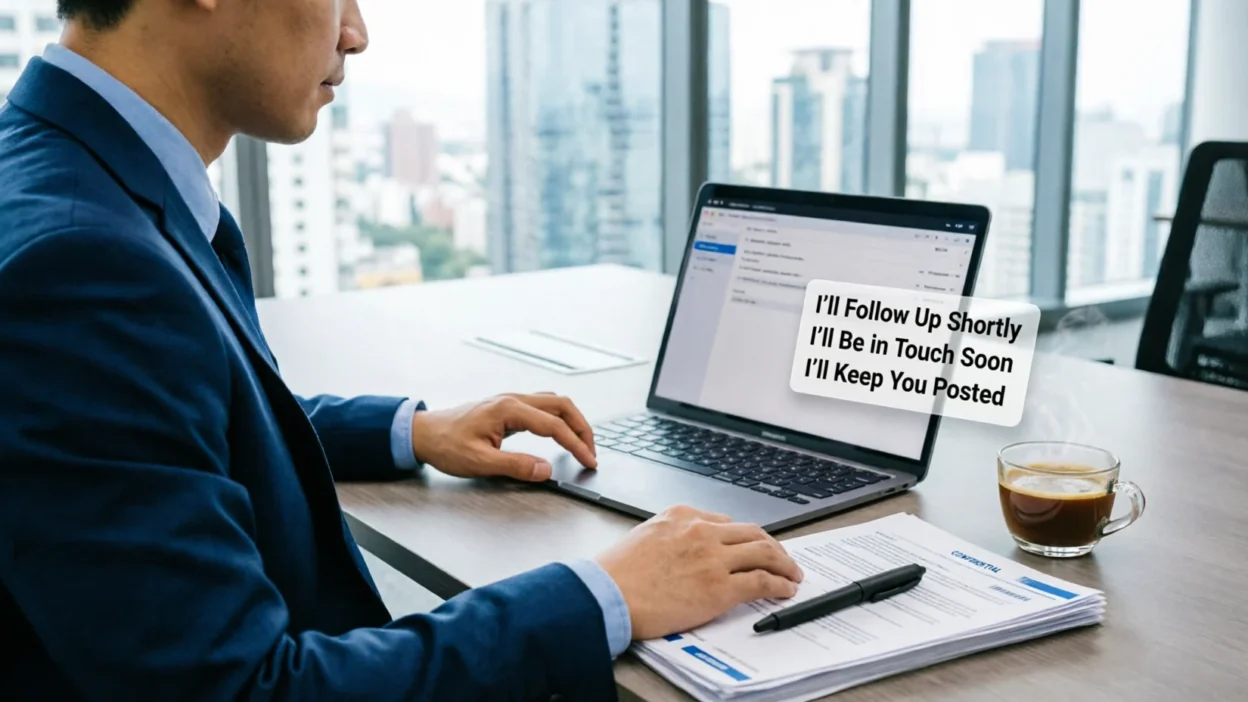
I’ll Follow Up Shortly
Meaning: You will provide an update soon.
Usage Rule: Common in business communication.
Example: “I’ll follow up shortly with the requested information.”
Tip: Professional and concise.
I’ll Respond As Soon As Possible
Meaning: You intend to reply promptly.
Usage Rule: Emails and customer service communication.
Example: “I’ll respond as soon as possible after reviewing the details.”
Tip: Sets clear expectations.
I’ll Be In Touch Soon
Meaning: You plan to contact the person again shortly.
Usage Rule: Professional and personal situations.
Example: “I’ll be in touch soon regarding the next steps.”
Tip: Friendly and versatile.
I’ll Get Back to You Shortly
Meaning: A slightly more polished version of the original phrase.
Usage Rule: Workplace communication.
Example: “I’ll get back to you shortly after speaking with the team.”
Tip: Professional and widely accepted.
I’ll Reach Out Soon
Meaning: You will initiate further communication.
Usage Rule: Networking and business interactions.
Example: “I’ll reach out soon with an update.”
Tip: Modern and professional.
I’ll Provide an Update Soon
Meaning: You will share new information when available.
Usage Rule: Project management and client communication.
Example: “I’ll provide an update soon regarding the timeline.”
Tip: Useful for ongoing discussions.
I’ll Review This and Respond
Meaning: You need time to evaluate before replying.
Usage Rule: Formal business settings.
Example: “I’ll review this and respond by tomorrow.”
Tip: Creates confidence and clarity.
Formal Alternatives for Business Communication
I’ll Revert to You Shortly
Meaning: You will reply after reviewing the matter.
Usage Rule: Corporate and international business communication.
Example: “I’ll revert to you shortly with further details.”
Tip: Common in formal business environments.
I’ll Update You Once I Have More Information
Meaning: You will respond after gathering details.
Usage Rule: Professional correspondence.
Example: “I’ll update you once I have more information.”
Tip: Sets realistic expectations.
I’ll Contact You Again Soon
Meaning: Future communication is planned.
Usage Rule: Formal conversations.
Example: “I’ll contact you again soon regarding the proposal.”
Tip: Clear and professional.
Expect an Update Shortly
Meaning: The recipient should anticipate a response.
Usage Rule: Client communication.
Example: “Expect an update shortly after our review.”
Tip: Confident and direct.
I’ll Return With an Answer Soon
Meaning: You need time before providing a response.
Usage Rule: Formal discussions.
Example: “I’ll return with an answer soon.”
Tip: Professional alternative.
I’ll Address This Promptly
Meaning: You intend to handle the matter quickly.
Usage Rule: Customer service and management.
Example: “I’ll address this promptly and update you.”
Tip: Demonstrates urgency.
I’ll Reply After Reviewing the Details
Meaning: A response depends on evaluation.
Usage Rule: Professional emails.
Example: “I’ll reply after reviewing the details carefully.”
Tip: Communicates diligence.
Friendly Alternatives for Everyday Conversations
I’ll Let You Know Soon
Meaning: You’ll provide information shortly.
Usage Rule: Casual conversations.
Example: “I’ll let you know soon what I decide.”
Tip: Natural and conversational.
I’ll Keep You Posted
Meaning: You’ll provide updates as things develop.
Usage Rule: Informal and semi-professional settings.
Example: “I’ll keep you posted on any changes.”
Tip: Popular and friendly.
I’ll Talk to You Soon
Meaning: Communication will continue shortly.
Usage Rule: Friends, family, and colleagues.
Example: “I’ll talk to you soon after the meeting.”
Tip: Warm and personal.
I’ll Check and Let You Know
Meaning: You need to verify information first.
Usage Rule: Casual and professional situations.
Example: “I’ll check and let you know later today.”
Tip: Honest and practical.
Give Me a Little Time
Meaning: You need additional time to respond.
Usage Rule: Informal discussions.
Example: “Give me a little time, and I’ll get back to you.”
Tip: Friendly approach.
I’ll Have an Answer Soon
Meaning: A response is forthcoming.
Usage Rule: General communication.
Example: “I’ll have an answer soon.”
Tip: Simple and effective.
I’ll Update You Later
Meaning: Information will be shared later.
Usage Rule: Casual communication.
Example: “I’ll update you later once I know more.”
Tip: Straightforward alternative.
Customer Service Alternatives
I’ll Look Into It and Get Back to You
Meaning: You need to investigate before responding.
Usage Rule: Customer support interactions.
Example: “I’ll look into it and get back to you shortly.”
Tip: Reassuring and professional.
I’ll Follow Up With More Information
Meaning: Additional details will be provided later.
Usage Rule: Customer and client communication.
Example: “I’ll follow up with more information tomorrow.”
Tip: Sets expectations clearly.
Let Me Check on That
Meaning: Verification is required.
Usage Rule: Support and service conversations.
Example: “Let me check on that and get back to you.”
Tip: Common customer service phrase.
I’ll Update You Once It’s Confirmed
Meaning: Information is pending confirmation.
Usage Rule: Service-related communication.
Example: “I’ll update you once it’s confirmed.”
Tip: Avoids premature promises.
I’ll Investigate and Respond
Meaning: You need to research the issue.
Usage Rule: Technical and support situations.
Example: “I’ll investigate and respond as soon as possible.”
Tip: Professional and trustworthy.
You’ll Hear From Me Soon
Meaning: Future communication is guaranteed.
Usage Rule: Customer relations.
Example: “You’ll hear from me soon regarding your request.”
Tip: Friendly reassurance.
I’ll Keep You Informed
Meaning: Continuous updates will be provided.
Usage Rule: Customer service and project management.
Example: “I’ll keep you informed throughout the process.”
Tip: Builds trust.
Modern and Workplace Alternatives
I’ll Circle Back With You
Meaning: You’ll revisit the discussion later.
Usage Rule: Corporate environments.
Example: “I’ll circle back with you once I have an update.”
Tip: Popular workplace phrase.
Let Me Touch Base Later
Meaning: You’ll reconnect after gathering information.
Usage Rule: Business communication.
Example: “Let me touch base later this week.”
Tip: Casual professional language.
I’ll Follow Through and Update You
Meaning: You’ll complete the task and report back.
Usage Rule: Team projects.
Example: “I’ll follow through and update you tomorrow.”
Tip: Demonstrates accountability.
I’ll Get More Details and Reach Out
Meaning: More information is needed first.
Usage Rule: Professional communication.
Example: “I’ll get more details and reach out soon.”
Tip: Useful in project discussions.
I’ll Connect With You Shortly
Meaning: Communication will continue soon.
Usage Rule: Business and networking.
Example: “I’ll connect with you shortly regarding next steps.”
Tip: Professional and modern.
I’ll Return With More Information
Meaning: You plan to provide additional details.
Usage Rule: Workplace communication.
Example: “I’ll return with more information after the review.”
Tip: Formal and effective.
I’ll Come Back With an Update
Meaning: You’ll provide progress information later.
Usage Rule: Team collaboration.
Example: “I’ll come back with an update this afternoon.”
Tip: Clear and practical.
Placement and Grammar Rules Table
| Phrase | Tone | Example |
|---|---|---|
| I’ll Follow Up Shortly | Professional | I’ll follow up shortly with the report |
| I’ll Keep You Posted | Friendly | I’ll keep you posted on the results |
| I’ll Circle Back With You | Corporate | I’ll circle back with you tomorrow |
Common Mistakes
Making Unrealistic Promises
Meaning: Committing to a timeline you cannot meet.
Usage Rule: Give realistic response times.
Example: Avoid saying “soon” if it may take several days.
Tip: Set accurate expectations.
Forgetting to Follow Up
Meaning: Promising communication but failing to deliver.
Usage Rule: Track commitments carefully.
Example: Use reminders when necessary.
Tip: Reliability builds trust.
Using Informal Phrases in Formal Settings
Meaning: Casual language may seem unprofessional.
Usage Rule: Match wording to the audience.
Example: Use “I’ll provide an update soon” instead of “I’ll let you know.”
Tip: Consider context.
Being Too Vague
Meaning: The recipient may not know when to expect a response.
Usage Rule: Include a timeframe when possible.
Example: “I’ll respond by Friday.”
Tip: Improves clarity.
Overusing One Phrase
Meaning: Repetition can reduce professionalism.
Usage Rule: Rotate among suitable alternatives.
Example: Alternate between “I’ll follow up shortly” and “I’ll be in touch soon.”
Tip: Variety enhances communication.
Practical Example Paragraphs
“Thank you for bringing this matter to my attention. I’ll review the information carefully and follow up shortly with a detailed response. If additional clarification is needed, I’ll be in touch soon.”
“We are currently assessing your request and gathering the necessary details. I’ll keep you informed throughout the process and provide an update as soon as new information becomes available.”
FAQs
What is the best professional alternative to I will get back to you soon?
“I’ll follow up shortly” is one of the most professional and widely accepted alternatives.
What can I say instead of I will get back to you in an email?
Try “I’ll respond as soon as possible,” “I’ll provide an update soon,” or “I’ll review this and respond.”
Is I’ll circle back with you professional?
Yes, it is commonly used in corporate environments, although some people find it overly corporate.
What is a formal way to say I will get back to you soon?
“I’ll update you once I have more information” and “I’ll revert to you shortly” are formal options.
What is a friendly alternative?
“I’ll let you know soon” and “I’ll keep you posted” work well in casual conversations.
Final Thoughts
Using other ways to say I will get back to you soon can make your communication more professional, clear, and engaging. Different alternatives help you set expectations, maintain trust, and adapt your tone to various situations.
Whether you’re responding to a client, colleague, customer, or friend, choosing the right phrase ensures your message sounds confident, reliable, and considerate.

Miller Rhodes is an American nonfiction writer focused on personal growth and modern entrepreneurship.
His work blends thoughtful analysis with practical strategies for navigating today’s digital world.
He writes to help readers think clearer, act smarter, and build meaningful success.